May 25, 2021

THE WORLD IS TOO MUCH WITH US BY WILLIAM WORDSWORTH

THE WORLD IS TOO MUCH WITH US  
WILLIAM WORDSWORTH


William Wordsworth (1770-1850) spent most of his life in the Lake district of northern England, and the many hours that he spent wandering about the hills and woods led to the production of some of the finest poetry on nature. His work Lyrical Ballads, co-authored with Coleridge in 1798, is regarded as the beginning of the English Romantic Movement. He selected subjects from nature and rustic life. He held the view that the language of poetry should be simple and natural.


The World is too much with us; late and soon,

Getting and spending, we lay waste our powers:

Little we see in Nature that is ours;

We have given our hearts away, a sordid boon!

The Sea that bares her bosom to the moon;

The Winds that will be howling at all hours,

And are up-gathered now like sleeping flowers,

For this, for everything, we are out of tune;

It moves us not.—Great God! I’d rather be

A Pagan suckled in a creed outworn;

So might I, standing on this pleasant lea,

Have glimpses that would make me less forlorn;

Have sight of Proteus rising from the sea;

Or hear old Triton blow his wreathèd horn.

TELEPHONE CONVERSATION BY WOLE SOYINKA

TELEPHONE CONVERSATION 
WOLE SOYINKA


Wole Soyinka (born 1934), is a famous Nigerian poet and playwright. He was educated at the Government College in Ibadan, Nigeria and, later, at Leeds University, England, where he took a degree in English. He taught in the London schools and also worked in the Royal Court Theatre. He returned to Nigeria when he was about twenty-five. He has been one of the leading figures in Nigerian theatre, writing a number of successful plays and also leading a theatrical company. He is the first African to receive the Nobel Prize for literature (1986). His writings are known for their humour and satire.


The price seemed reasonable, location

Indifferent. The landlady swore she lived

Off premises. Nothing remained

But self-confession. ‘Madam,’ I warned,

‘I hate a wasted journey-I am African.’

Silence. Silenced transmission of

Pressurised good-breeding. Voice, when it came,

Lipstick coated, long gold-rolled

Cigarette-holder pipped. Caught I was, foully.

‘HOW DARK ?’... I had not misheard... ‘ARE YOU LIGHT

OR VERY DARK ?’ Button B. Button A. Stench

Of rancid breath of public hide-and-speak.

Red booth. Red pillar-box. Red double-tiered

Omnibus squelching tar. It was real! Shamed

By ill-mannered silence, surrender

Pushed dumbfounded to beg simplification.

Considerate she was, varying the emphasis-

‘ARE YOU DARK? OR VERY LIGHT?’ Revelation came.

‘You mean-like plain or milk chocolate?’

Her assent was clinical, crushing in its light

Impersonality. Rapidly, wave-length adjusted,

I chose. ‘West African sepia’-and as afterthought,

“down in my passport.” Silence for spectroscopic

Flight of fancy, till truthfulness changed her accent

Hard on the mouthpiece. ‘WHAT’S THAT?’ conceding

‘DON’T KNOW WHAT THAT IS.’ ‘Like brunette.’

‘THAT’S DARK, ISN’T IT?’ ‘Not altogether.

Facially, I am brunette, but madam, you should see

The rest of me. Palm of my hand, soles of my feet

Are a peroxide blonde. Friction, caused-

Foolishly madam-by sitting down, has turned

My bottom raven black-One moment madam!’-sensing

Her receiver rearing on the thunderclap

About my ears-‘Madam,’ I pleaded, ‘wouldn’t you rather See 

for yourself?’

COMING BY PHILIP LARKIN

COMING 

PHILIP LARKIN 


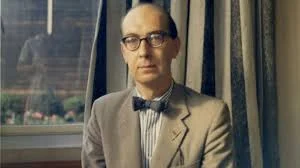
Philip Larkin (1922–1985) was born in Coventry, England. He is well-known as a leader of ‘Movement’ in English Poetry in the fifties. The principal works of Philip Larkin are The North Ship, The Less Deceived, The Whitsun Weddings and High Windows. His themes - love, change, disenchantment, the mystery, the inexplicableness of the poet’s survival and death’s inevitability - are universally liked by the readers. The above poem has been taken from the volume, The Less Deceived, which establishes a kinship with the environment.


On longer evenings,

Light, chill and yellow,

Bathes the serene

Foreheads of houses.

A thrush sings,

Laurel-surrounded

In the deep bare garden,

Its fresh-peeled voice

Astonishing the brickwork.

It will be spring soon,

It will be spring soon -

And I, whose childhood

Is a forgotten boredom,

Feel like a child

Who comes on a scene

Of adult reconciling,

And can understand nothing

But the unusual laughter,

And starts to be happy.

LET ME NOT TO THE MARRIAGE OF TRUE MINDS BY WILLIAM SHAKESPEARE

LET ME NOT TO THE MARRIAGE OF TRUE MINDS
WILLIAM SHAKESPEARE


William Shakespeare (1564–1616) was one of the greatest poets and dramatists of the English language. Born at Stafford-on-Avon, England, he went to London where his reputation as a dramatist and poet was established. His Sonnets, 154 in number, probably written between 1593 and 1598, were published in 1602. The above sonnet is sonnet number 116 in which we have a depiction of true love. His voluminous work includes 37 plays and two narrative poems.


Let me not to the marriage of true minds

Admit impediments. Love is not love

Which alters when it alteration finds,

Or bends with the remover to remove.

O no, it is an ever-fixed mark

That looks on tempests and is never shaken;

It is the star to every wandering bark,

Whose worth’s unknown, although his height be taken.

Love’s not Time’s fool, though rosy lips and cheeks

Within his bending sickle’s compass come;

Love alters not with his brief hours and weeks,

But bears it out even to the edge of doom.

If this be error, and upon me proved,

I never writ, nor no man ever loved.

May 11, 2021

THE PEACOCK BY SUJATA BHATT

THE PEACOCK 

SUJATA BHATT


Sujata Bhatt (born 1956)) was educated in the USA and now lives in Germany. She won the Commonwealth Poetry Prize for the Asia section for her collection of poems, Brunizem (1988), from which ‘The Peacock’ is taken. Two other books of poems by her are Monkey Shadows (1991) and The Stinking Rose (1994). She has also translated Gujarati poetry into English.


His loud sharp call

seems to come from nowhere.

Then, a flash of turquoise

in the pipal tree

The slender neck arched away from you

as he descends,

and as he darts away, a glimpse

of the very end of his tail.

I was told

that you have to sit in the veranda

And read a book,

preferably one of your favourites

with great concentration..

The moment you begin to live

inside the book

A blue shadow will fall over you.

The wind will change direction,

The steady hum of bees

In the bushes nearby

will stop.

The cat will awaken and stretch.

Something has broken your attention;

And if you look up in time

You might see the peacock turning away as he gathers

his tail

To shut those dark glowing eyes,

Violet fringed with golden amber.

It is the tail that has to blink

For eyes that are always open.